
If you’ve ever dreamed of owning an office building, retail space, warehouse, or apartment complex, you’re not alone. Commercial real estate can be a powerful way to build wealth, generate steady cash flow, and diversify your investment portfolio. But let’s be honest—figuring out a commercial property loan can feel overwhelming at first.
The good news? It doesn’t have to be.
In this guide, I’ll walk you through what this loan is, how it works, what lenders look for, and how you can improve your chances of approval. Whether you’re a first-time investor or expanding your portfolio, this article will help you make informed, confident decisions.
Table of Contents
What Is a Commercial Property Loan?
A commercial property loan is a type of financing used to purchase, refinance, or renovate property that’s intended for business purposes. Unlike residential mortgages, which are for personal homes, this loans are used for:
- Office buildings
- Retail spaces
- Industrial properties
- Warehouses
- Multi-family apartment complexes (5+ units)
- Mixed-use developments
If the property is meant to generate income or support business operations, you’re likely looking at a commercial real estate loan.
How Is a Commercial Property Loan Different from a Residential Loan?
This is one of the most common questions people ask.
Here’s the key difference: commercial loans are based more on the property’s income potential than your personal income.
With residential loans, lenders focus heavily on your credit score, salary, and debt-to-income ratio. With this property loans, they also look closely at:
- The property’s cash flow
- Net Operating Income (NOI)
- Debt Service Coverage Ratio (DSCR)
- Business financials (if applicable)
In short, the property itself has to make financial sense.
Types of Commercial Property Loans
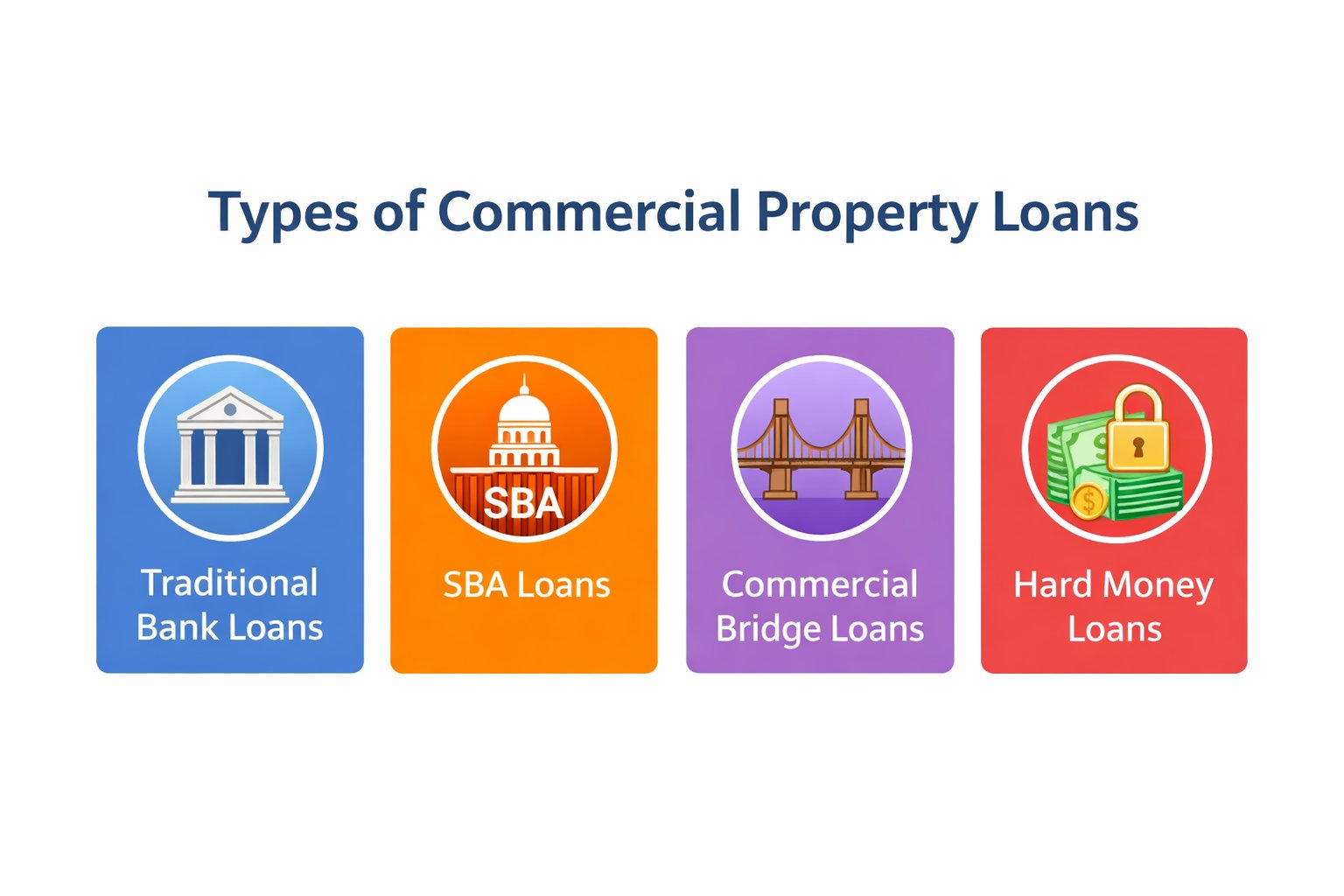
Not all commercial real estate loans are created equal. The right one depends on your goals, timeline, and financial situation.
1. Traditional Bank Loans
These are offered by banks and credit unions. They often have competitive interest rates but stricter qualification requirements.
Best for: Established investors with strong credit and financial history.
2. SBA Loans (Small Business Administration)
SBA 7(a) and 504 loans are popular for business owners who want to buy property for their own operations.
Pros:
- Lower down payments
- Longer repayment terms
- Competitive rates
Best for: Small business owners purchasing owner-occupied property.
3. Commercial Bridge Loans
Need short-term financing while waiting for long-term funding or a property sale? A bridge loan may help.
Best for: Investors who need quick funding.
4. Hard Money Loans
These are asset-based loans from private lenders. They’re easier to qualify for but come with higher interest rates.
Best for: Fix-and-flip projects or borrowers with less-than-perfect credit.
Key Terms You Should Know
Let’s simplify some common terms so you’re not lost in lender conversations.
Loan-to-Value (LTV)
This is the percentage of the property’s value the lender is willing to finance. Most commercial lenders offer 65%–80% LTV.
Example:
If the property costs $1,000,000 and the lender offers 75% LTV, you’ll need $250,000 as a down payment.
Debt Service Coverage Ratio (DSCR)
This measures whether the property generates enough income to cover the loan payments.
Most lenders want a DSCR of 1.20–1.30 or higher. That means the property makes at least 20–30% more than the loan payments require.
Amortization Period
This is how long the loan is structured to be paid off (often 20–30 years), even if the loan term is shorter.
How to Qualify for a Commercial Property Loan
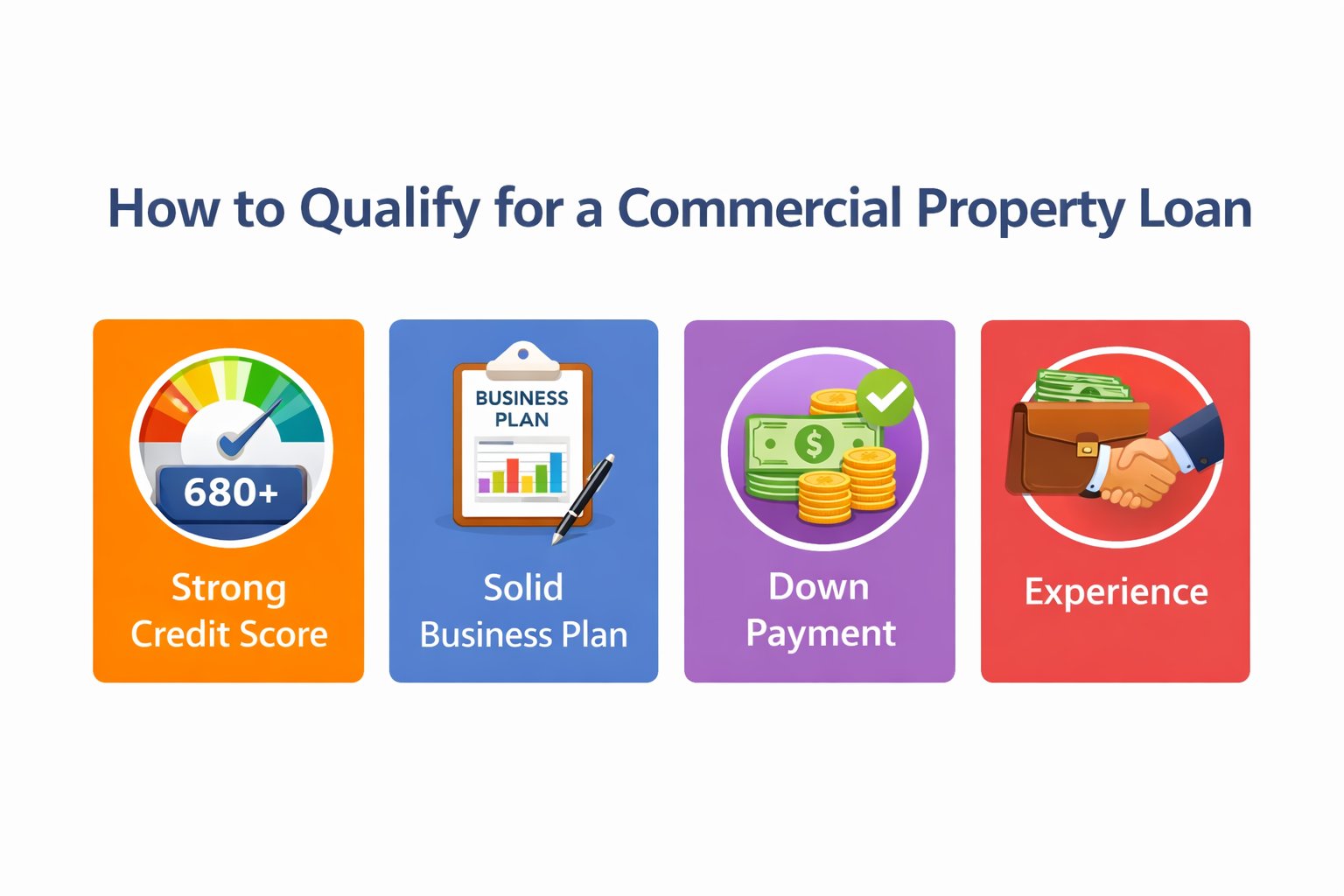
If you’re serious about securing financing, here’s what lenders typically look for:
1. Strong Credit Score
Most lenders prefer a credit score of 680 or higher, though some will go lower depending on the deal.
2. Solid Business Plan
If you’re buying an investment property, you need to clearly show:
- How the property will generate income
- Your management strategy
- Financial projections
3. Down Payment
Expect to put down 20% to 35% in most cases.
4. Experience
First-time investors can qualify, but lenders feel more comfortable when you have experience managing similar properties.
If you’re new, consider partnering with someone who has a track record.
Interest Rates on Commercial Property Loans
Interest rates for commercial real estate loans typically range between 5% and 12%, depending on:
- Your credit profile
- Market conditions
- Property type
- Loan term
- Risk level
Rates are usually higher than residential mortgages because this loans carry more risk for lenders.
Pro tip: Always compare multiple lenders. Even a 0.5% difference can save you thousands over time.
Benefits of a Commercial Property Loan
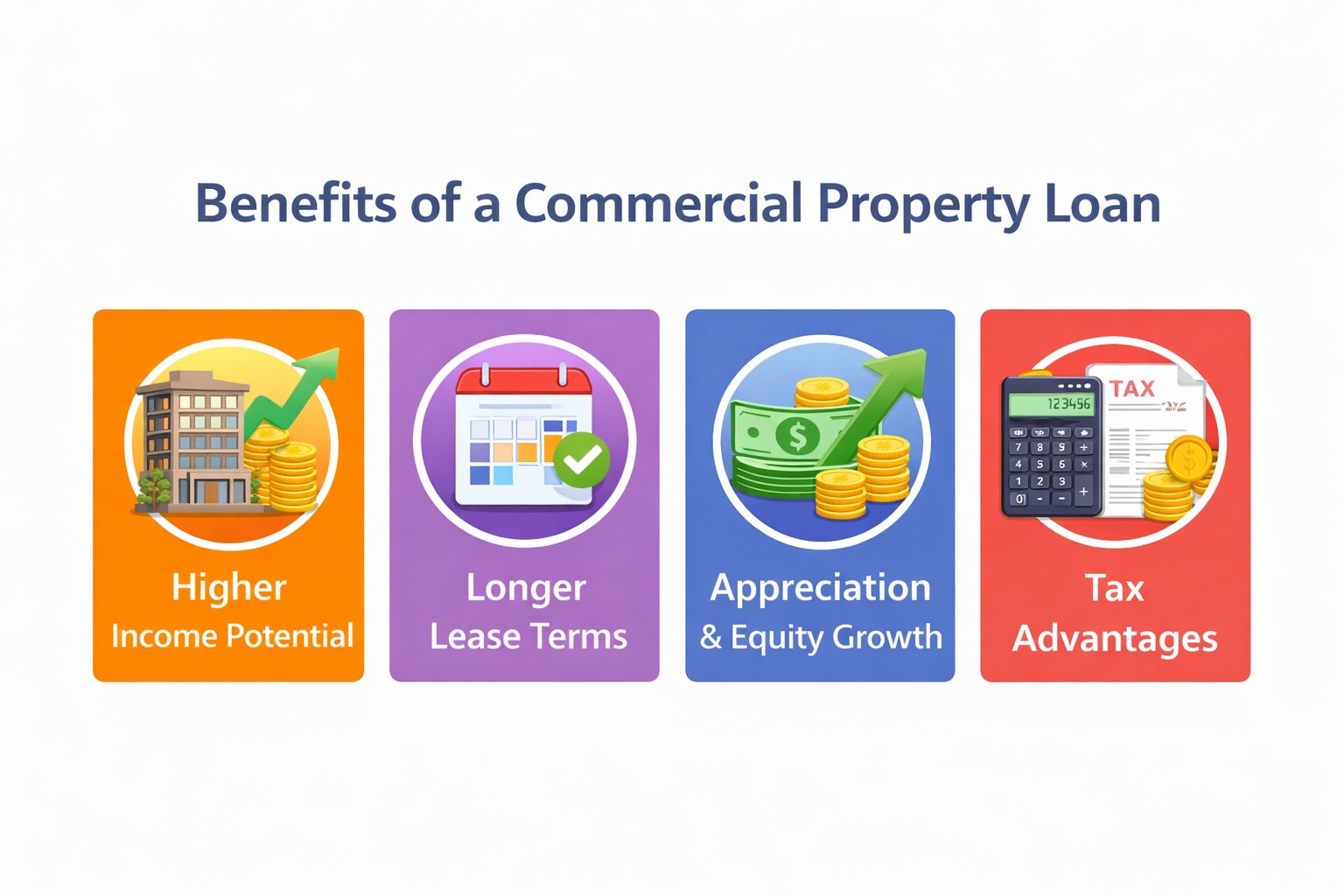
Let’s talk about why so many investors pursue commercial real estate financing.
1. Higher Income Potential
Commercial properties often generate stronger cash flow compared to residential rentals.
2. Longer Lease Terms
Many commercial leases run 3–10 years, providing more predictable income.
3. Appreciation & Equity Growth
As the property increases in value and you pay down the loan, your equity grows.
4. Tax Advantages
Commercial real estate offers potential tax benefits like depreciation and expense deductions. (Always consult a tax professional.)
Risks to Consider
It’s important to be realistic. Commercial investing isn’t risk-free.
- Vacancy periods can impact income
- Property values can fluctuate
- Repairs and maintenance costs can be high
- Interest rate increases may affect adjustable-rate loans
Doing proper due diligence is critical before signing any loan agreement.
Tips to Improve Your Chances of Approval
If you’re planning to apply for this property loan, here are some actionable tips:
✔ Improve Your Credit Score
Pay down existing debt and fix any errors on your credit report before applying.
✔ Prepare Detailed Financial Statements
Have your tax returns, profit and loss statements, and balance sheets ready.
✔ Show Strong Cash Flow
Lenders want reassurance that the property will cover the debt.
✔ Build Relationships with Lenders
Sometimes, relationships matter. Work with lenders who understand your long-term goals.
Is a Commercial Property Loan Right for You?
Ask yourself:
- Do you have enough capital for a down payment?
- Are you comfortable with the risk?
- Do you have a plan to generate consistent income?
- Are you ready to manage or oversee a commercial property?
If you answered yes to most of these, you may be ready to move forward.
Final Thoughts: Take the Next Step with Confidence
A commercial property loan can open the door to serious wealth-building opportunities—but only if you approach it with the right knowledge and preparation.
The key is understanding the numbers, knowing what lenders expect, and choosing the loan structure that aligns with your financial goals.
If you’re looking to expand your financial knowledge and explore more insights on money, business, and opportunities, I recommend checking out helpful resources like:
These platforms provide additional articles and insights that can help you stay informed and make smarter financial decisions.
Remember This
Commercial real estate isn’t just about buying property—it’s about building a strategy.
The right property loan can help you create long-term income, grow your portfolio, and move closer to financial freedom.
Take your time. Run the numbers. Ask questions. And most importantly—invest with intention.
If you’re considering this property purchase, now is the perfect time to start planning. Your future self will thank you.