
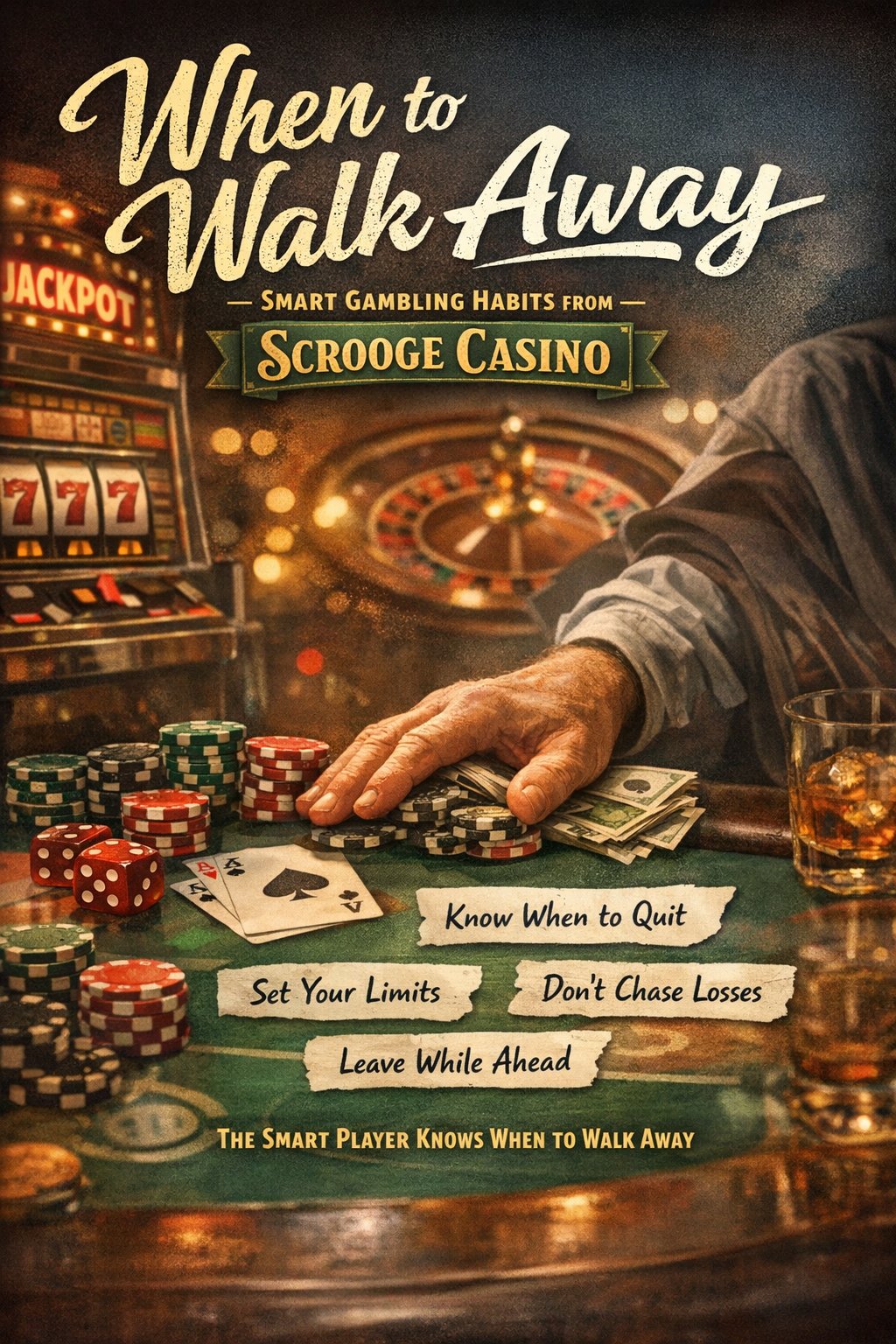
There’s a moment every gambler recognizes—but not everyone respects.
It’s that subtle shift. The energy changes. The excitement starts to feel heavier. Maybe the wins slow down, or the losses begin to stack. Maybe you’re still ahead, but something in your gut whispers: this might be the right time to stop.
At Scrooge Casino, we believe that the smartest players aren’t the ones who win the most—they’re the ones who know when to walk away.
This isn’t about luck. It’s about discipline, awareness, and long-term thinking. Gambling, when done right, is entertainment. When done without boundaries, it can quietly become something else.
So let’s talk about what most platforms don’t emphasize enough: how to stop at the right time—and why it matters more than winning.
Table of Contents
The Illusion of “One More Round”
One of the most powerful traps in gambling is the idea of just one more.
- “One more spin.”
- “One more hand.”
- “One more bet to recover losses.”
- “One more win before I leave.”
It sounds harmless. In fact, it often feels logical.
But here’s the reality: gambling is designed to keep you playing, not to tell you when to stop.
Games are fast-paced. Wins create dopamine spikes. Losses trigger the urge to chase. The environment—whether digital or physical—is engineered to minimize pause and maximize continuation.
That “one more” mindset is where discipline gets tested.
And more often than not, it’s where profits quietly disappear.
Winning Doesn’t Mean You Should Stay
Here’s a counterintuitive truth: winning is one of the most dangerous times to keep playing.
Why?
Because confidence rises.
When you’re ahead, your brain starts rewriting the story:
- “I’m on a streak.”
- “I figured this game out.”
- “I can push this further.”
But gambling outcomes don’t remember your last win.
Each spin, each hand, each roll is independent. The system doesn’t reward streaks—it resets probability every time.
Many players who walk in and win leave with less than they started with—not because they played poorly, but because they didn’t leave early.
At Scrooge Casino, we often say:
“A win only becomes real when you walk away with it.”
Losing Streaks and the Trap of Chasing
If winning creates overconfidence, losing creates urgency.
And urgency is where bad decisions happen.
Chasing losses is one of the most common—and costly—habits in gambling. It usually sounds like this:
- “I just need to break even.”
- “I’ll stop once I recover.”
- “I can’t leave on a loss.”
But chasing losses is like trying to catch a moving train by running faster—it rarely works, and it often leads to bigger problems.
When you’re losing, your emotional state shifts:
- Rational thinking decreases
- Risk tolerance increases
- Decision-making becomes reactive
The result? Bigger bets, faster play, and less control.
Walking away during a loss isn’t weakness. It’s strategy.
The Psychology Behind Knowing When to Stop
Understanding when to walk away isn’t just about rules—it’s about self-awareness.
Every player has emotional triggers:
- Excitement
- Frustration
- Overconfidence
- Anxiety
These emotions influence how long you play and how you bet.
The key is recognizing when your mindset changes.
Ask yourself:
- Am I still enjoying this?
- Am I thinking clearly, or reacting emotionally?
- Am I playing with intention—or just continuing out of habit?
The moment your answers start shifting, that’s your signal.
Smart players don’t wait until things go wrong. They leave before control slips.
Setting Limits Before You Play
One of the simplest and most effective habits is setting boundaries before you start playing.
This includes:
1. A Loss Limit
Decide how much you’re willing to lose—and stick to it.
Not “approximately.” Not “we’ll see.”
A clear number.
Once you hit it, you stop. No negotiations.
2. A Win Target
This might sound unusual, but it’s powerful.
Set a point where you’ll walk away even if you’re winning.
For example:
- “If I double my money, I leave.”
- “If I hit this amount, I cash out.”
This prevents giving back your winnings.
3. A Time Limit
Time is often overlooked, but it matters.
The longer you play, the more likely fatigue and emotion influence decisions.
Set a duration:
- 30 minutes
- 1 hour
- 2 hours max
When the time is up, you stop—even if you’re mid-streak.
Why Discipline Beats Luck Every Time
Luck is unpredictable.
Discipline is controllable.
That’s the difference between short-term excitement and long-term sustainability.
Players who rely on luck:
- Ride emotional highs and lows
- Stay longer than planned
- Make impulsive decisions
Players who rely on discipline:
- Stick to limits
- Accept outcomes
- Leave with control intact
Over time, discipline always wins—not in the sense of constant profit, but in preserving your experience, your bankroll, and your mindset.
Recognizing the “Tipping Point”
Every session has a tipping point—the moment when continuing becomes riskier than stopping.
It’s not always obvious.
Sometimes it looks like:
- Playing faster than usual
- Increasing bet sizes without a plan
- Feeling irritated instead of entertained
- Ignoring limits you set earlier
Other times, it’s quieter:
- A subtle urge to stay longer than planned
- A feeling of “I shouldn’t stop now”
- A belief that the next round will fix everything
These are not signals to continue.
They’re signals to leave.
The Myth of “Hot” and “Cold” Streaks
Many players believe in hot and cold streaks.
- “This machine is hot.”
- “I’m on a roll.”
- “It’s due for a win.”
While streaks can happen in the short term, they don’t change the underlying probabilities.
Believing in streaks can lead to:
- Staying too long during wins
- Betting more aggressively
- Ignoring limits
The truth is simple:
The game doesn’t know your history.
Walking away doesn’t mean you’re missing out—it means you’re protecting what you have.
Walking Away Is a Skill, Not a Weakness
There’s a misconception that stopping early means giving up.
In reality, it’s the opposite.
Walking away requires:
- Self-control
- Awareness
- Confidence
It means you’re not controlled by the game—you’re controlling your experience.
At Scrooge Casino, we view this as one of the most important skills a player can develop.
Because anyone can keep playing.
Not everyone can stop.
Practical Strategies to Make Walking Away Easier
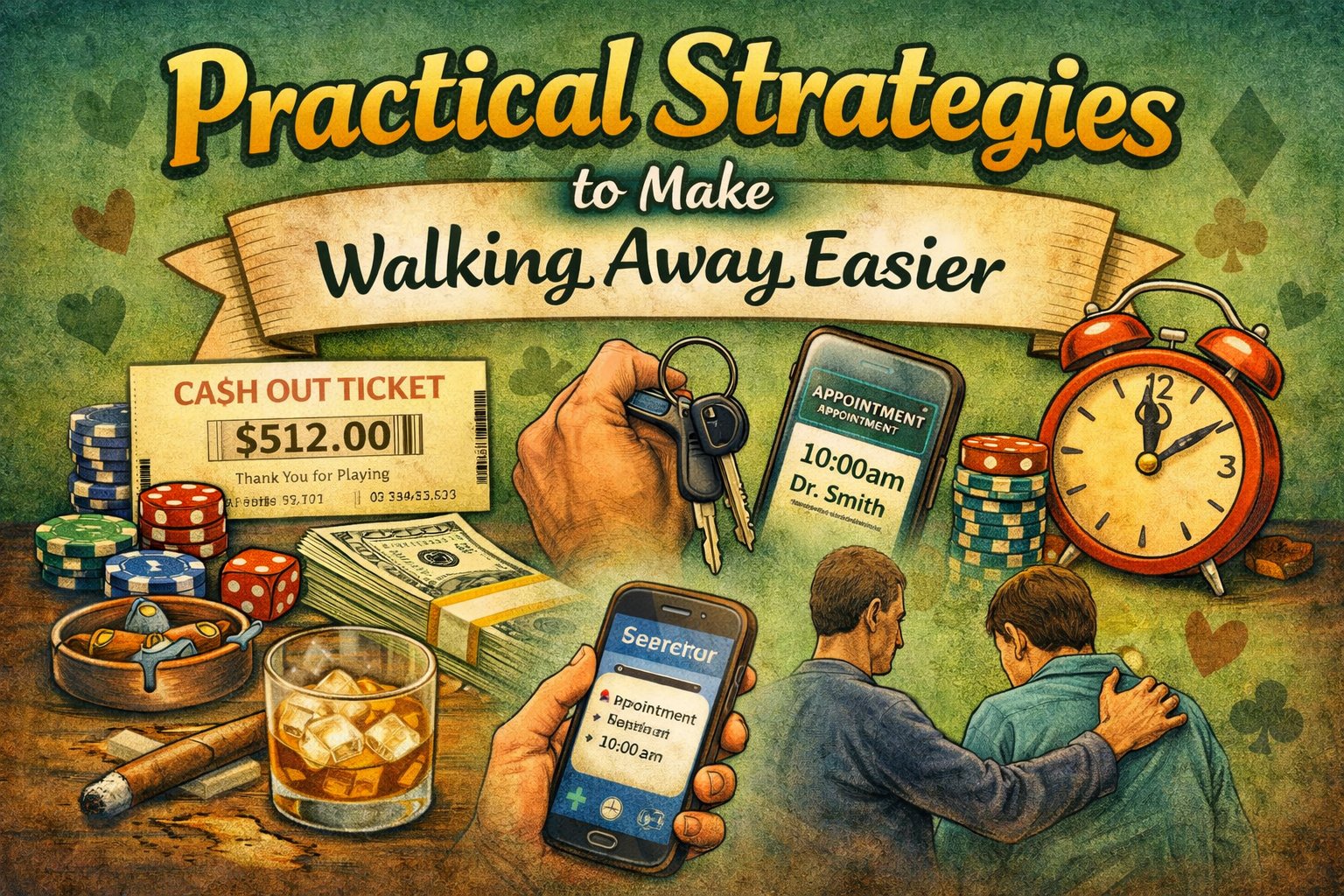
Knowing when to walk away is one thing. Actually doing it is another.
Here are practical ways to make it easier:
1. Use Cash-Out Moments as Checkpoints
Every time you win, pause.
Don’t immediately continue.
Ask:
- “Should I keep going or stop here?”
This creates intentional breaks in your session.
2. Separate Gambling Money from Everything Else
Only play with money you’ve set aside for entertainment.
Never mix it with:
- Rent
- Bills
- Savings
This reduces emotional pressure and makes stopping easier.
3. Avoid Playing When Emotional
If you’re:
- Stressed
- Angry
- Tired
- Distracted
Don’t play.
These states make it harder to walk away.
4. Take Breaks
Even short pauses can reset your mindset.
Step away.
Breathe.
Re-evaluate.
Sometimes, a break reveals that you’re ready to stop.
5. Accept That You Can’t Control Outcomes
You can control:
- How much you bet
- How long you play
- When you stop
You cannot control:
- Results
Accepting this makes walking away much easier.
The Role of Responsible Gambling
At its core, gambling should be:
- Fun
- Controlled
- Temporary
Not:
- Stressful
- Compulsive
- Endless
Responsible gambling isn’t about restriction—it’s about balance.
It’s about making sure the experience stays positive.
Walking away is a central part of that balance.
What Smart Players Understand
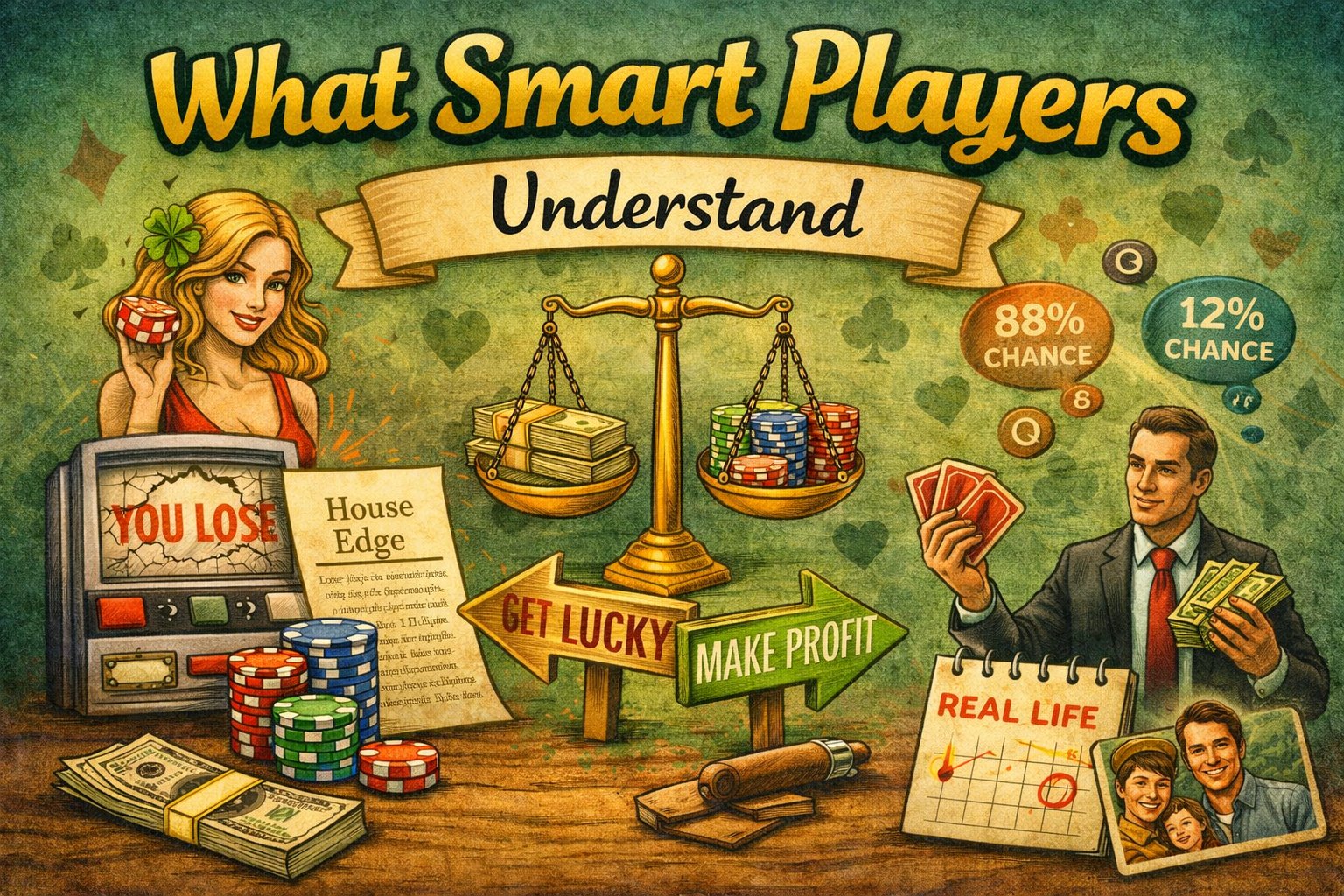
Over time, experienced players learn something important:
It’s not about winning every session.
It’s about managing sessions wisely.
They understand:
- Losses are part of the game
- Wins are temporary
- Control is everything
And most importantly:
They know when to leave.
Reframing Success in Gambling
Success isn’t:
- Playing the longest
- Winning the biggest jackpot
- Taking the highest risks
Success is:
- Staying in control
- Enjoying the experience
- Leaving on your own terms
That might mean:
- Leaving while ahead
- Accepting a small loss
- Ending a session earlier than expected
These aren’t failures.
They’re smart decisions.
Final Thoughts: The Power of the Exit
Every gambler focuses on entry—what to play, how much to bet, when to start.
But the most important decision is often the last one:
When to stop.
Walking away is where discipline meets awareness.
It’s where short-term excitement gives way to long-term thinking.
It’s where you prove—to yourself—that you’re in control.
At Scrooge Casino, we believe that the smartest habit any player can develop isn’t about strategy, odds, or systems.
It’s this:
Knowing when enough is enough.
Because in the end, the real win isn’t just what you earn—it’s what you keep.
And sometimes, the strongest move you can make… is simply walking away.